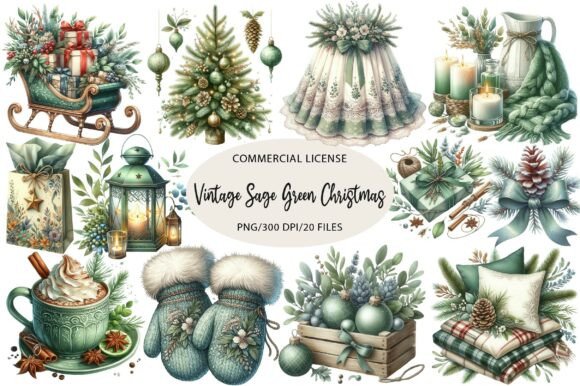
Reviewing Watercolor Vintage Sage Green Christmas for Stitchers
As a designer who has spent years translating digital art into thread, I approach every new machine embroidery design with a mix of excitement and skepticism. We have all been there: you download a beautiful file, load it onto your machine, and watch in horror as the thread bunches up or the details vanish into the fabric. That is why I took a close, practical look at Watercolor Vintage Sage Green Christmas before committing it to any client work or personal holiday projects. This isn’t just about whether it looks pretty on a screen; it is about how it performs under the needle.
First Impressions and Visual Mood
The immediate appeal of Watercolor Vintage Sage Green Christmas lies in its restrained elegance. In a market saturated with bright reds and flashy golds, this piece offers a sophisticated, muted palette that speaks to modern farmhouse and vintage aesthetics. The watercolor effect suggests softness, which can be tricky in embroidery because thread is inherently textured and solid. However, the layout here is smart. It avoids the trap of trying to mimic every pixel of a watercolor wash with dense stitching, which would result in a stiff, cardboard-like patch.
Instead, the design relies on strategic use of fill stitch and running stitch to suggest form rather than dictate it. For an Etsy seller or boutique owner, this visual personality is a asset. It feels high-end and curated, fitting perfectly into a brand that values subtlety over loud statements. It belongs naturally on items that are meant to be cherished and displayed, rather than just used and tossed aside.
Real-World Application: The Holiday Tote Scenario
To test its viability, I imagined a specific real-life scenario: creating a limited run of custom holiday gift bags for a local bakery. I chose a heavy canvas tote bag design as the substrate. Canvas is forgiving, but it can be unforgiving if the stitch density is too high, causing puckering around the edges.
With Watercolor Vintage Sage Green Christmas, the open areas in the design allowed the natural texture of the canvas to breathe. I paired the sage greens with a creamy off-white thread for the highlights, avoiding stark white which can look cheap against vintage tones. The result was a handmade product that looked professionally finished. Customers didn’t just see a logo; they saw a piece of art. This kind of reaction builds customer trust and increases the perceived value of the finished product.
Versatility Across Product Lines
Beyond tote bags, this design shines in several other categories. For sweatshirt embroidery, the softer color palette complements heather gray or oatmeal-colored fleece beautifully. It avoids the "corporate uniform" look that often plagues small business merchandise. If you are creating baby embroidery items, such as a nursery blanket or a milestone onesie, the gentle sage tones are gender-neutral and calming, making it a strong contender for personalized gift markets.
For those selling digital embroidery file assets, this type of illustration serves as a excellent base for applique design variations. You could easily layer a solid fabric cutout beneath the outline stitches to create a different texture while maintaining the original shape. This versatility makes it a valuable addition to any design assets library for creative entrepreneurs.
Technical Considerations and Fabric Choices
While the design is versatile, it is not without its limitations. As an experienced reviewer, I must point out where caution is needed. The watercolor aesthetic relies on subtle gradients. On dark fabrics, these nuances can get lost unless you use a high-contrast underlay or choose lighter thread colors that pop. Always test your thread colors on scrap fabric first. A black-and-white mockup can also reveal if the contrast is sufficient for the design to read clearly from a distance.
Curved surfaces present another challenge. If you plan to use this on a embroidered patch for a cap or hat, be mindful of the hoop size and the curvature of the brim. Dense areas may pull the fabric if the stabilizer isn't robust enough. I recommend using a cut-away stabilizer for stretchy fabrics like jersey knits or fleece to prevent distortion after washing. For woven fabrics like linen or cotton, a tear-away might suffice, but always consider the end-use. A kitchen towel will undergo frequent washing and heat, so durability is key.
Stitching Clarity and Detail Level
One of the strengths of Watercolor Vintage Sage Green Christmas is its balance of detail and simplicity. It does not rely on tiny, fragile lettering or microscopic details that are prone to breaking or tangling. This makes it accessible for hobbyists with mid-range machines as well as professionals with industrial multi-needle setups. However, always check the hoop size requirements. If the design is large, ensure your machine can handle the dimensions without needing to re-hoop, which can lead to alignment issues.
For commercial embroidery projects, consistency is vital. This design’s clear lines and defined shapes make it easier to reproduce accurately across multiple units. Whether you are making ten aprons for a staff or fifty pillow covers for a holiday sale, the design holds its integrity well, provided you maintain consistent tension and thread quality.
Enhancing Brand Value and Customer Engagement
In the world of online sales, presentation is everything. A well-executed embroidery project using this design can elevate your brand perception. It signals that you care about aesthetics and quality. When customers see a cohesive look across your small shop product line, from tags to packaging to the item itself, it creates a memorable unboxing experience. This attention to detail drives buyer engagement and encourages repeat business.
Furthermore, using trending aesthetics like vintage sage green helps your products stand out in crowded marketplaces. It appeals to buyers looking for something unique and timeless, rather than trendy and disposable. This aligns well with the values of many modern consumers who prioritize sustainability and craftsmanship.
Final Designer Notes
Before you launch into production, remember these practical steps:
- Test on Scrap: Never skip the test stitch. Check for thread breaks, nesting, or fabric puckering.
- Check Licensing: Confirm whether the digital embroidery file allows for commercial use if you plan to sell finished items.
- Contrast Check: Ensure your thread choices provide enough contrast against your chosen fabric, especially for light-on-light combinations.
- Stabilizer Selection: Match your stabilizer to your fabric weight and stretch. Wrong stabilizer choice is the number one cause of poor results.
- Mockups: Use printable mockups to visualize the design on different products before stitching.
In conclusion, Watercolor Vintage Sage Green Christmas is a thoughtful, well-constructed design that bridges the gap between artistic illustration and practical embroidery. It requires a bit of technical mindfulness regarding fabric and thread choices, but the payoff is a sophisticated, high-value product that resonates with today’s discerning crafters and buyers. Whether you are a seasoned Etsy seller or a hobbyist making gifts for family, this design offers a reliable and beautiful foundation for your next holiday creation.