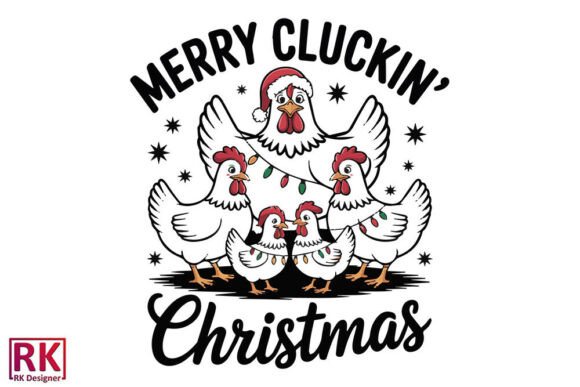
Reviewing Merry Cluckin Christmas, Christmas Farm
As a designer who spends more time staring at stitch previews than actual fabric, I have learned to be skeptical of holiday designs. The market is flooded with generic snowflakes and hurried Santa motifs that look charming on a screen but turn into a tangled mess under the needle. When I first pulled up Merry Cluckin Christmas, Christmas Farm, I was looking for something that balanced humor with technical feasibility. This isn’t just another barnyard clipart; it is a specific piece within the broader category of Illustrations that demands a closer look before you commit it to your client’s favorite sweatshirt.
The First Impression: Mood and Layout
The immediate vibe of this design is playful and rustic. It captures that specific niche of farmhouse chic that has remained surprisingly resilient in the handmade market. The layout feels intentional, avoiding the cluttered look that plagues many seasonal files. For an embroidery project, clarity is king. If the viewer has to squint to understand the joke or the subject, the design has failed. Here, the visual personality is bold enough to read from a distance but detailed enough to reward a closer inspection.
What stands out is how the elements interact. In many farm-themed designs, the animals look pasted on top of the background. In this case, the integration suggests a cohesive scene. For those of us selling handmade products, this cohesion translates to perceived value. A customer is more likely to trust the quality of a personalized gift if the underlying art looks professional rather than assembled from disparate freebie sources.
Real-World Application: The Tote Bag Test
To truly evaluate a machine embroidery design, I mentally place it on various substrates. Let’s consider a heavy canvas tote bag, a staple for any Etsy seller during the holiday rush. Canvas is forgiving, but it has a distinct weave. A design like Merry Cluckin Christmas, Christmas Farm needs to hold its own against that texture.
I imagine stitching this onto a natural-colored cotton tote. The contrast between the thread colors and the fabric would be crucial. If the design relies heavily on subtle shading, it might get lost. However, if it utilizes strong outlines and solid fill stitch areas, it will pop. This design seems suited for items that need to make a statement quickly, such as a tote bag design for a local farmer’s market or a boutique grocery store. It fits the aesthetic of customers who appreciate artisanal goods and have a sense of humor about their holiday shopping.
Performance on Apparel and Textiles
Moving beyond bags, let’s talk about custom apparel. A fleece-lined hoodie or a classic crewneck sweatshirt is a prime candidate for this type of graphic. The thickness of the fabric provides a stable base, reducing the risk of puckering that often plagues lighter materials. When executing sweatshirt embroidery, density management is key. You do not want a stiff, cardboard-like patch on a soft garment.
If this file includes varied stitch types, such as satin stitch for borders and text, and running stitch for finer details, it offers versatility. Satin stitches provide a shiny, premium finish that catches the light, enhancing the visual appeal of the finished product. However, on stretchy fabrics, high-density satin columns can cause tunneling. I would advise testing the stitch density on a scrap piece of similar weight fabric before running the final job. This is especially important for baby embroidery projects, where comfort is paramount and skin sensitivity is a concern.
For those interested in embroidered patch creation, this design could work well if scaled correctly. Patches require higher density to prevent fraying edges, so checking the file’s adaptability is essential. If the original embroidery file is optimized for direct stitching, you may need to adjust settings or add a border when converting it for patch production.
Technical Considerations and Pitfalls
No design is universal, and Merry Cluckin Christmas, Christmas Farm is no exception. There are specific scenarios where caution is required. Small hoop sizes, such as 4x4 inches, might crop essential elements if the design was originally digitized for a larger area like 5x7 or 6x10. Always verify the hoop size compatibility before purchasing or downloading.
Textured fabrics present another challenge. If you are stitching on a waffle-knit towel or a ribbed sweater, fine details can disappear into the valleys of the fabric. In these cases, a digital embroidery file with bolder lines performs better than one with intricate, thin connections. Additionally, dark fabrics require careful thread selection. If the design includes black or dark brown elements, they will vanish on navy or black garments unless you use a contrasting underlay or switch to lighter thread colors.
Curved surfaces, like caps, introduce distortion. Stitching a large, complex illustration on a curved brim can lead to registration issues. For holiday embroidery on hats, consider simplifying the design or using it as a smaller chest emblem rather than a full-front centerpiece. Always use the appropriate stabilizer; cut-away stabilizer is generally safer for garments that will undergo frequent washing, ensuring the design remains intact over time.
Commercial Viability and Brand Consistency
For craft business owners, the decision to use a specific design impacts brand consistency. Does Merry Cluckin Christmas, Christmas Farm align with your shop’s aesthetic? If you specialize in minimalist modern decor, this rustic, humorous piece might feel out of place. However, for shops focusing on cozy, traditional, or whimsical items, it is a strong asset.
Using high-quality design assets like this enhances customer trust. Buyers can spot low-resolution or poorly digitized files instantly. A clean, well-stitched image in your printable mockup or product photos signals professionalism. It suggests that you care about the details, which encourages higher engagement and potentially allows for a higher price point. This is crucial for small shop product differentiation in a crowded marketplace.
Final Designer Notes
Before you launch this into your production queue, take these practical steps. First, always test the design on scrap fabric that matches your final material. Check the thread color contrast in both natural and artificial light. Review the stitch path to ensure there are no unnecessary jumps or trims that could slow down your machine or create loose threads.
Inspect small details closely. Are there tiny lettering elements that might merge during stitching? If so, consider scaling up slightly or removing those elements for smaller applications. Compare how the design looks on light versus dark backgrounds using digital tools before committing to physical thread. Finally, confirm the licensing terms. Ensure that the commercial embroidery rights allow you to sell finished items or if there are restrictions on volume. Protecting your business legally is just as important as protecting your reputation creatively.
In summary, Merry Cluckin Christmas, Christmas Farm offers a charming, viable option for holiday projects when used with technical awareness. It bridges the gap between fun illustration and functional embroidery, provided you respect the limitations of your materials and machine. Happy stitching.