Reviewing Christmas Llama Gifts Clipart for Embroidery
As a designer who has spent countless hours staring at digitized files and troubleshooting thread breaks, I approach every new asset with a mix of curiosity and caution. When I first opened the Christmas Llama Gifts Clipart, my immediate reaction was not just about the cuteness factor, though that is certainly present. Instead, I looked at the lines, the spacing, and the potential translation from screen to fabric. For those of us running small shops or creating personalized gifts, the gap between a pretty illustration and a stitchable reality is where profits are made or lost.
This set of Illustrations brings a whimsical, modern holiday vibe that feels distinct from the traditional red-and-green overload we see every December. The llama motif has become a staple in contemporary craft culture, but integrating it into holiday themes requires a delicate balance. You do not want the design to look cluttered or lose its charm when reduced to thread. In this review, I am breaking down how this clipart performs in real-world embroidery scenarios, focusing on practical application for apparel, home decor, and commercial products.
First Impressions and Visual Personality
The mood created by the Christmas Llama Gifts Clipart is playful yet sophisticated. It avoids the childish trap that many animal-themed designs fall into, making it versatile for a wider demographic. The shapes are generally clean, which is a promising sign for embroidery. Complex, jagged lines often translate poorly into stitches, causing unnecessary jumps and potential puckering. Here, the silhouettes appear smooth, suggesting that a skilled digitizer could convert these into efficient machine embroidery designs without excessive stitch counts.
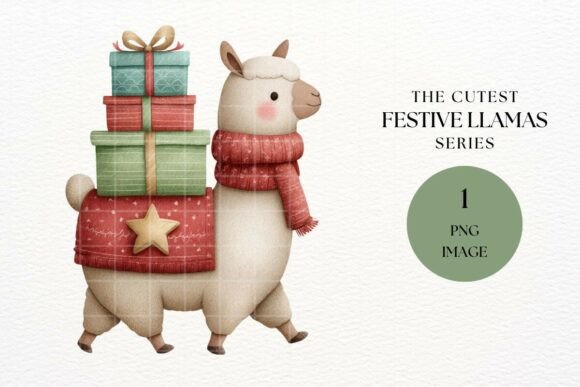
When evaluating the layout, I noticed ample negative space. This is crucial for embroidery because dense areas of satin stitch or fill stitch can pull on fabric, distorting the final image. The visual personality of these llamas, adorned with festive accessories like scarves or holding gifts, offers clear focal points. These elements provide excellent opportunities for using contrasting thread colors to make the design pop against various fabric textures.
Real-World Application: From Tote Bags to Sweatshirts
To truly test the viability of any design asset, you must imagine it on a physical product. I recently worked on a custom order for a boutique client who wanted unique holiday merchandise. The Christmas Llama Gifts Clipart immediately came to mind for a line of canvas tote bags. Canvas is a forgiving medium with a tight weave, ideal for handling the density of a detailed embroidery project. The whimsical nature of the llama paired with the durability of the bag creates a high-perceived-value item that customers love to gift.
Beyond totes, consider sweatshirt embroidery. A fleece or cotton-blend hoodie provides a plush background that makes embroidered designs stand out beautifully. Placing a smaller version of the llama design on the left chest area creates a subtle, professional look suitable for everyday wear. For baby embroidery, such as onesies or burp cloths, the soft curves of the design work well, provided you use a soft stabilizer and appropriate needle size to prevent irritation against sensitive skin. The theme fits perfectly for holiday gifts, allowing parents to dress their little ones in something festive but not overly traditional.
For Etsy sellers and craft business owners, versatility is key. This clipart can be adapted for embroidered patches, which are currently trending. A patch allows the customer to apply the design to multiple items, increasing the utility of your product. Whether it is an apron for the holiday baker or a pillow cover for seasonal home decor, the design holds its own. It translates well into digital embroidery file formats, assuming proper digitizing techniques are applied to maintain the integrity of the original illustration.
Navigating Technical Challenges
While the design is appealing, there are areas where caution is necessary. Small hoop sizes can be restrictive if the clipart includes intricate details like tiny eyes or small gift bows. If you are working with a 4x4 inch hoop, you may need to simplify the design or exclude the smallest elements to ensure stitching clarity. Textured fabrics, such as terry cloth towels or chunky knits, can swallow fine details. In these cases, using a heavier weight stabilizer is non-negotiable to keep the stitches floating above the texture rather than sinking into it.
Dark fabric presents another challenge. If you are stitching on navy or black garments, you must carefully select thread colors that offer sufficient contrast. A dark brown llama on a black shirt will vanish. Test your thread color combinations on scrap fabric before committing to the final product. Additionally, curved surfaces like caps require special attention. The curvature can distort the design if the hoop tension is not managed correctly. For cap embroidery, consider reducing the stitch density slightly to prevent puckering on the structured front panel.
Dense stitch areas should be reviewed closely. If the original clipart has large solid blocks of color, converting these directly to fill stitches can result in a stiff, heavy patch that may not drape well on clothing. Breaking up large fills with running stitch patterns or using applique design techniques can reduce bulk and improve the hand feel of the finished product. Always check whether the design works for both personal and commercial projects by confirming licensing terms before selling finished items.
Enhancing Brand Value and Customer Trust
Using high-quality assets like Christmas Llama Gifts Clipart directly impacts your brand consistency. Customers can spot low-effort designs from a mile away. A crisp, well-executed embroidery project signals professionalism and care. This builds trust, encouraging repeat buyers and positive reviews. For handmade product creators, the uniqueness of the llama theme helps your items stand out in a saturated market. It offers a fresh take on holiday embroidery that appeals to buyers looking for something different.
When creating printable mockups or digital product previews, ensure the representation matches the stitched reality. Misleading images can lead to returns and dissatisfaction. Use the clipart to create cohesive social media content that highlights the craftsmanship behind your work. Show close-ups of the stitch quality, the choice of thread colors, and the fabric texture. This transparency enhances buyer engagement and justifies premium pricing for custom apparel and personalized gifts.
Practical Designer Notes for Execution
- Test on Scrap Fabric: Always run a test stitch-out on the same type of fabric you intend to use for the final product. This reveals issues with tension, density, and registration.
- Check Thread Color Contrast: Plan your palette in advance. Ensure that adjacent colors do not blend together, losing the definition of the llama’s features.
- Review Stitch Density: If digitizing yourself, adjust the density based on the fabric weight. Lighter fabrics need lighter density to prevent distortion.
- Confirm Hoop Size: Measure the design dimensions against your available hoops. Do not force a large design into a small hoop without scaling, which may affect detail clarity.
- Inspect Small Details: Zoom in on the digital file. Are the lines too close together? Will the needle punch through the same hole twice? Adjust spacing if necessary.
- Use Proper Stabilizer: Match the stabilizer to the fabric. Cut-away for stretchy knits, tear-away for stable wovens, and wash-away for delicate or textured materials.
- Verify Licensing: Before using Christmas Llama Gifts Clipart in commercial embroidery projects, confirm the license allows for resale of physical goods. Some licenses restrict digital redistribution but allow physical sales.
In conclusion, this clipart set offers a strong foundation for creative entrepreneurs. With careful attention to technical execution and material selection, it can elevate your holiday collection. It is not just about stitching a picture; it is about creating a tangible piece of joy that resonates with the recipient. By treating each project with the diligence it deserves, you transform simple threads into lasting memories.